Transforming fragmented content production into an AI-native workflow designed to help healthcare teams create high-quality educational content faster, while maintaining accuracy, consistency and compliance.
Relias
Product Design Lead
EdTech
Enterprise





Uncovering a System in Transition
Over four weeks, we ran workshops and interviewed writers, reviewers and leadership. What emerged wasn’t a clearly broken system, existing processes were functional. Instead, we uncovered a workflow ecosystem already beginning to shift around generative AI.
Our task was to bring AI into a shared workflow while preserving the quality checks teams relied on.

Shifting Mindsets
Early conversations naturally focused on improving existing workflows rather than rethinking them entirely. To move beyond incremental change, we reframed discussions around the future. We helped teams look further ahead: what could AI take on, where would human judgement matter, and how could the work fit together?
Writers relied on manually applied Word templates to maintain structure and standards. Building those rules into the platform offered a way to reduce repetitive work and make outputs more consistent.

Before designing screens, we mapped the future workflow, showing how content would move through the system, who would be responsible, and where AI would help. This gave teams a shared understanding of how the platform should work.
We also explored how writers’ roles could shift from creating every draft themselves to guiding AI, editing content, checking accuracy and making decisions.

Showing Less, Enabling More
We explored a wide range of interface concepts to support writing, research, and review workflows across the platform.
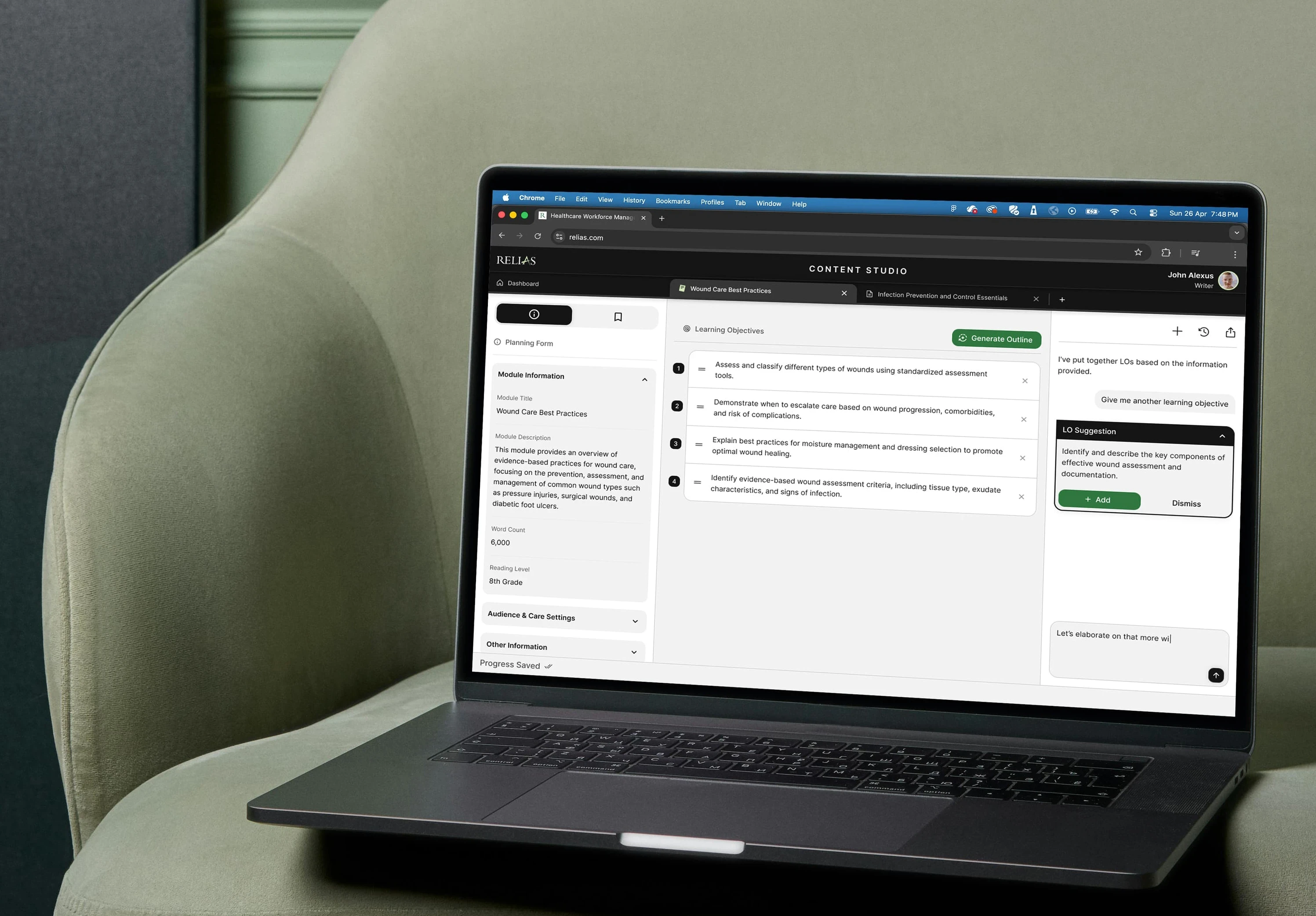
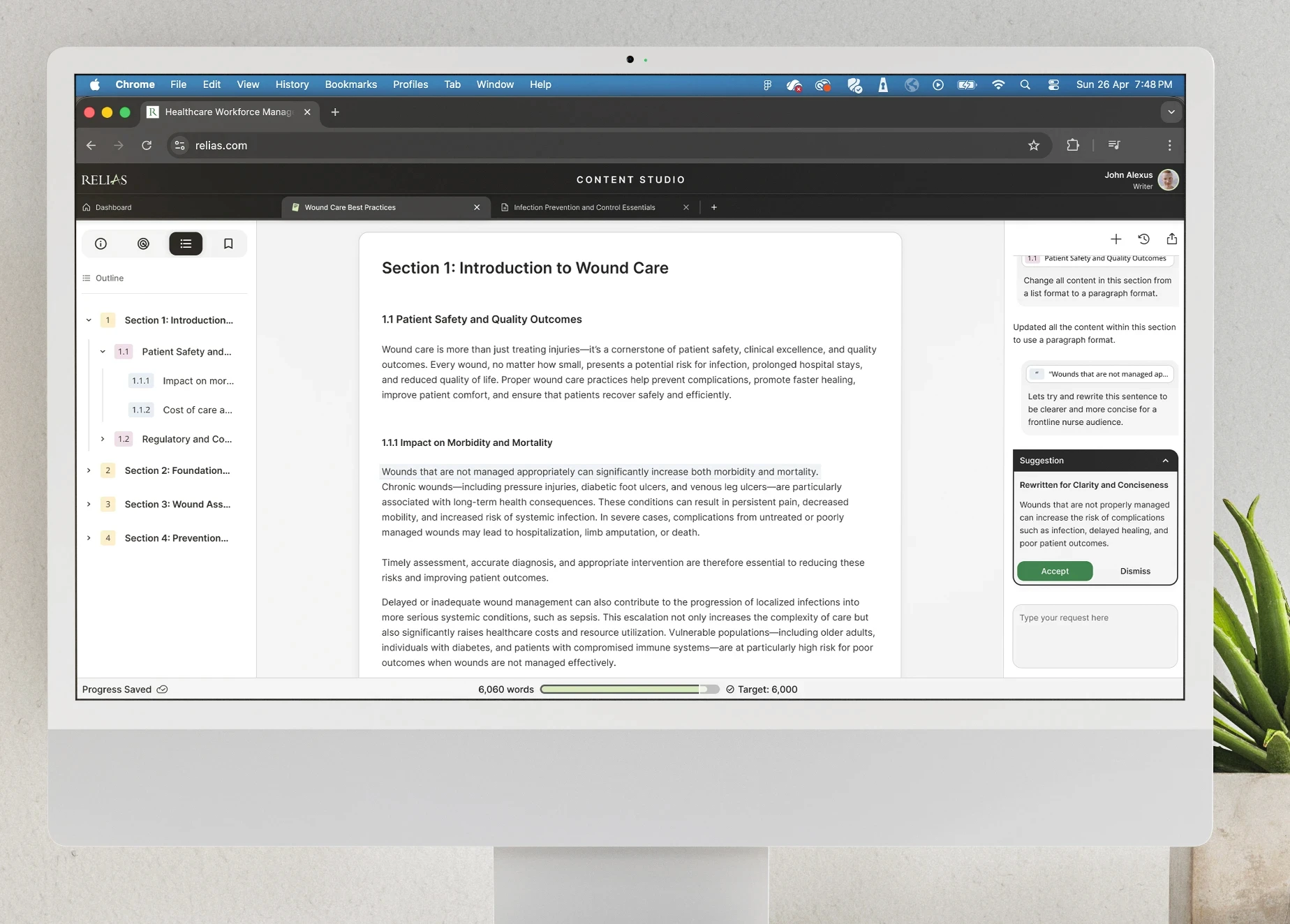
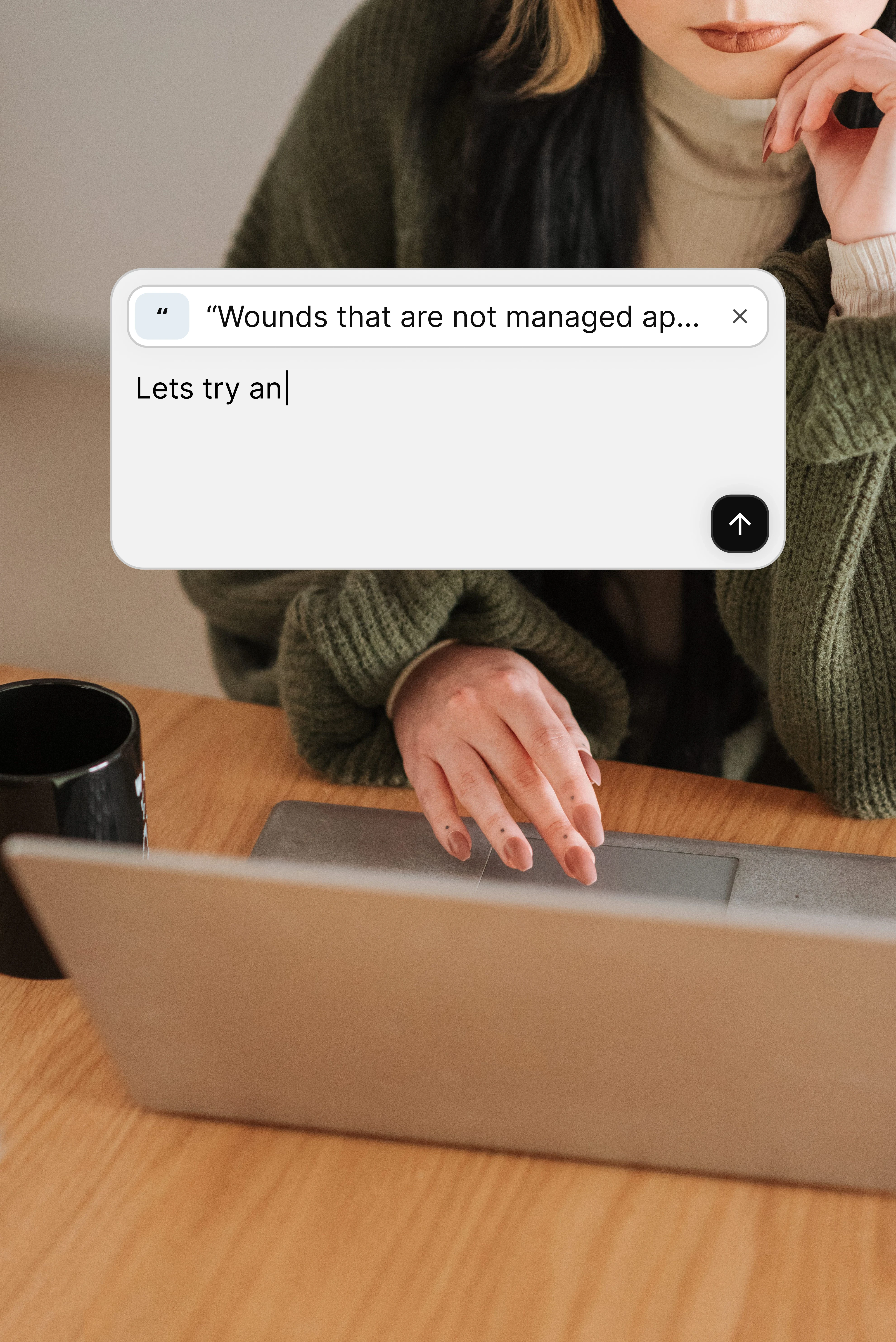
A key breakthrough emerged when I realised many traditionally separate interface patterns, searching, generating suggestions, editing content, and workflow actions, could be consolidated into a single conversational interaction model. Users no longer needed to navigate multiple UI components to complete tasks. Instead, they could express intent directly within the workflow.

This shift reduced interface complexity & significantly simplified the frontend architecture, creating a system that was easier to use, build, and scale.
Testing Beyond the Interface with AI Prototypes
Static screens could not capture how users would engage with a system driven by conversation, intent, and dynamic responses.
To simulate realistic interactions, I built a production-like prototype using Figma MCP and lightweight AI agents integrated through OpenAI’s API. This allowed us to test how users interacted with conversational workflows in context, rather than evaluating isolated interface states.

These prototypes enabled us to move beyond traditional usability testing and observe how users phrased requests, navigated workflows conversationally, and formed expectations around system behaviour and responsiveness.
The testing also revealed important implementation insights, helping shape how AI agents, orchestration logic, and conversational workflows should be structured within the product.
Connecting System Behaviour and Building a Scalable Design System
To design AI-native workflows effectively, it was essential to understand how orchestration systems, retrieval pipelines, validation layers, and specialised agents shaped behaviour behind the interface. Understanding these orchestration flows directly informed how conversational workflows, interaction states, and decision-making patterns were designed within the product as we balanced technical feasibility with users needs.


To support the first four months of implementation, we established a foundation of reusable components and shared styles. As the platform evolved, this grew into a scalable design system with consistent design tokens and interaction patterns.
This gave the team a foundation to build quickly, maintain consistency and adapt as the product and its AI capabilities evolved.
Continuous Iteration
With a five-week discovery and four-month implementation timeline, we focused on building a scalable foundation rather than solving every edge case upfront.
We achieved our primary goal of reducing transcript creation time by 50%. Post-launch interviews and usability testing helped validate assumptions, identify friction points, and uncover further opportunities as users adapted to AI-native workflows.
We prioritised improvements based on operational impact, implementation complexity, and long-term value, enabling continuous, focused iteration.