Transforming fragmented workflows and legacy processes into a connected operational platform for Toyota Racing Development.
Toyota Racing
Product Design Lead
Motorsports
Enterprise



Applying systems thinking to operational complexity
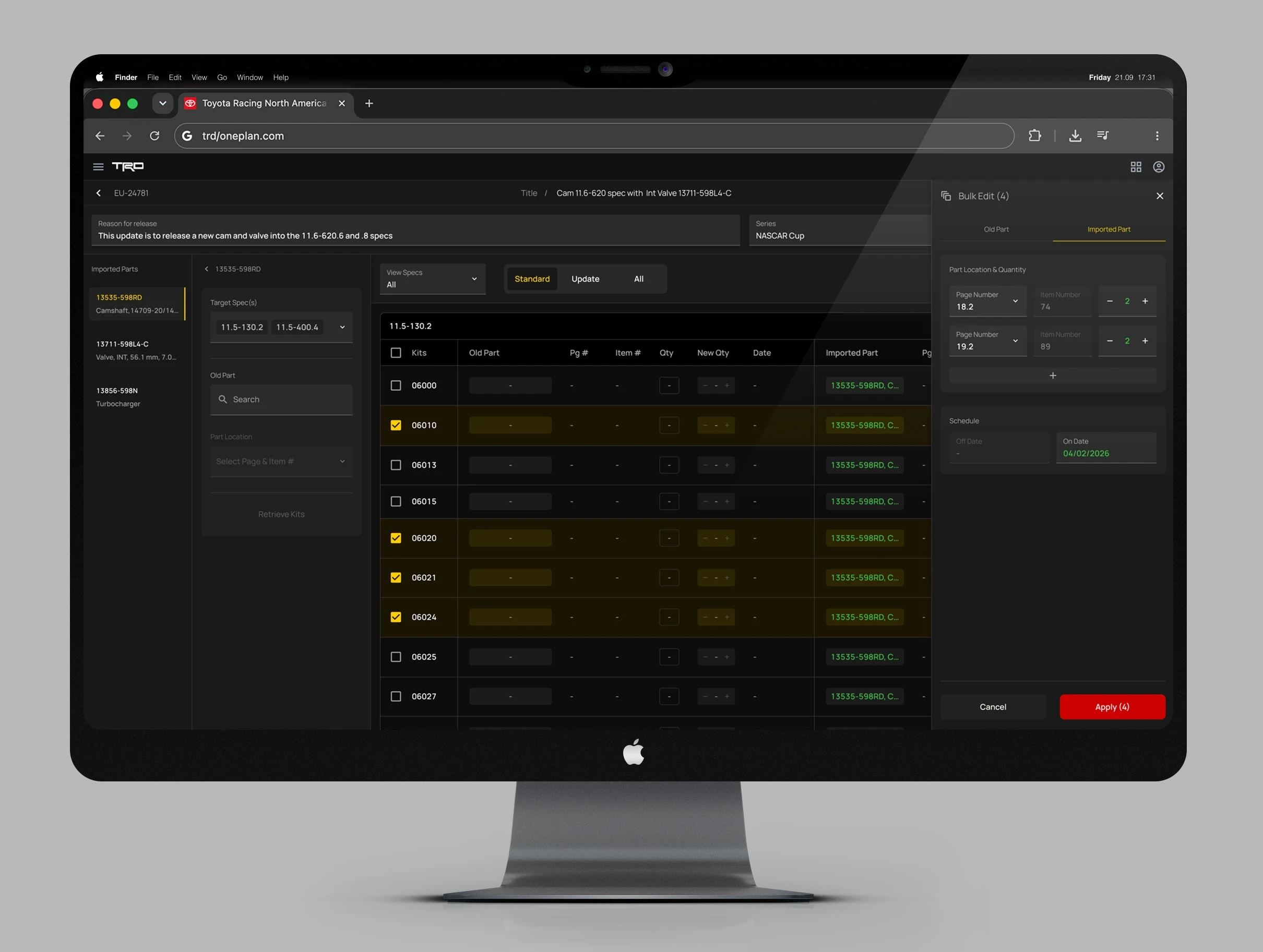
We mapped core system objects, their relationships, and the workflows connecting them across TRD. This systems-level view exposed fragmented processes, disconnected information, and critical dependencies, helping us identify opportunities for a more connected, structured platform.


Designing from the flow
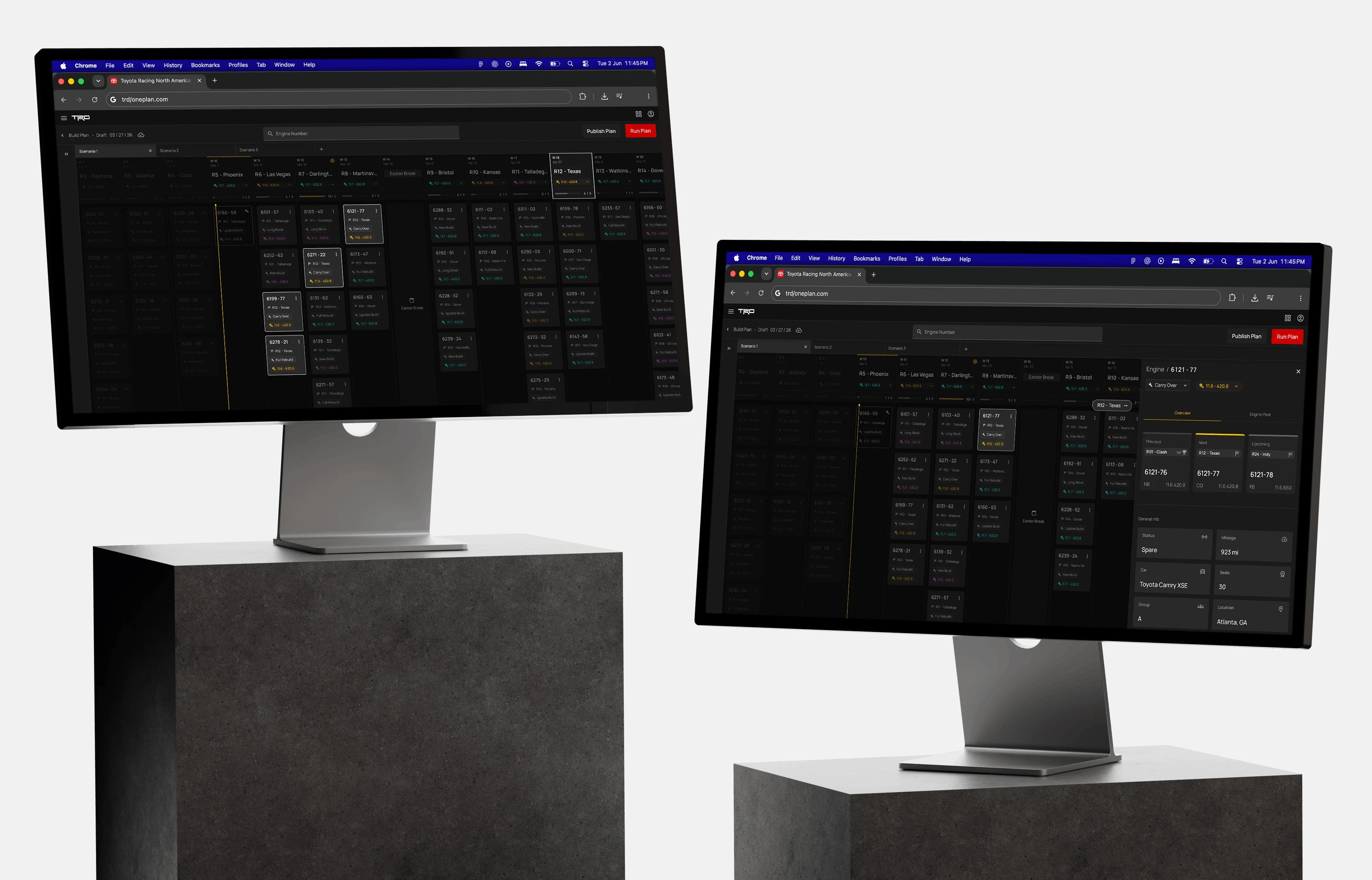
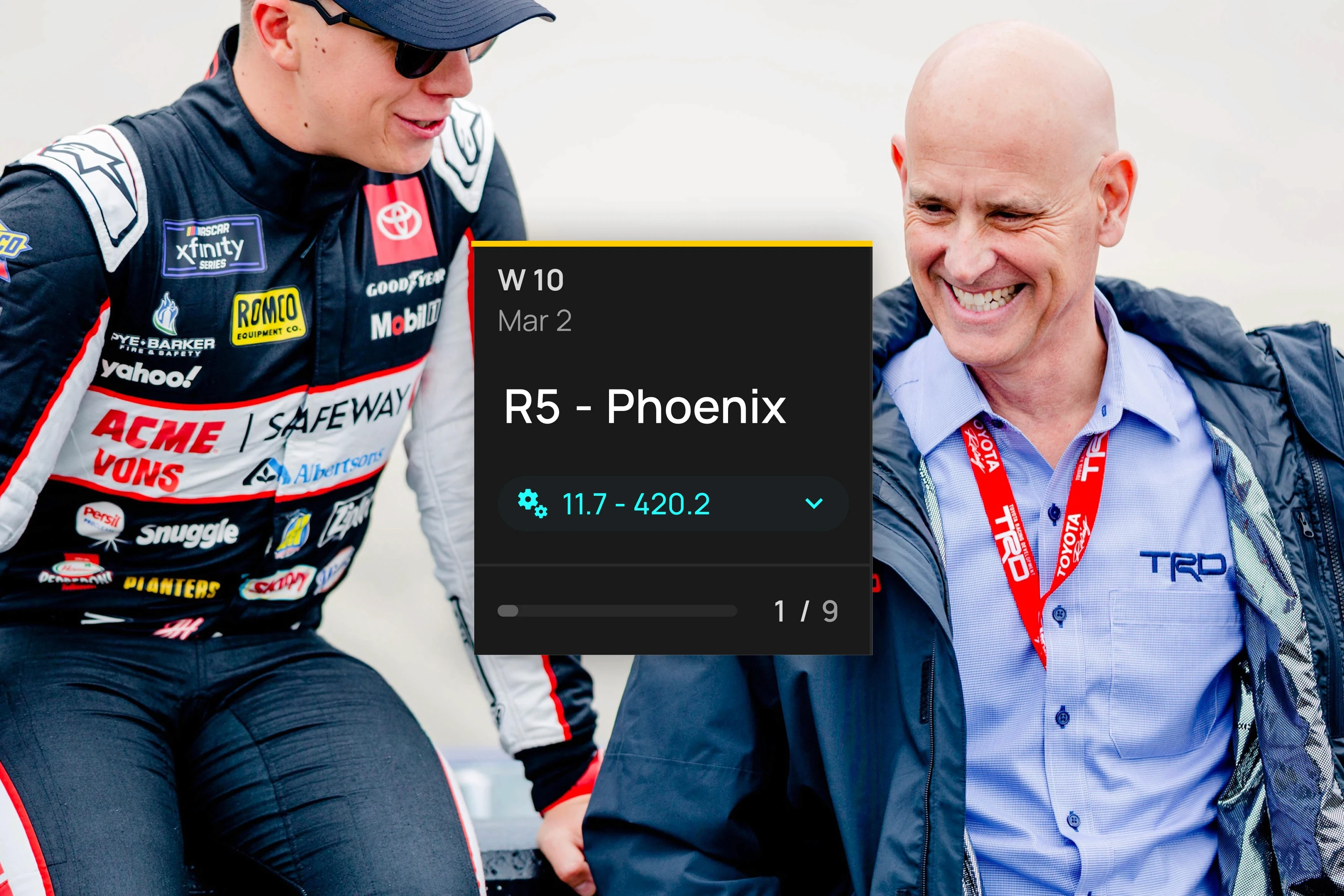
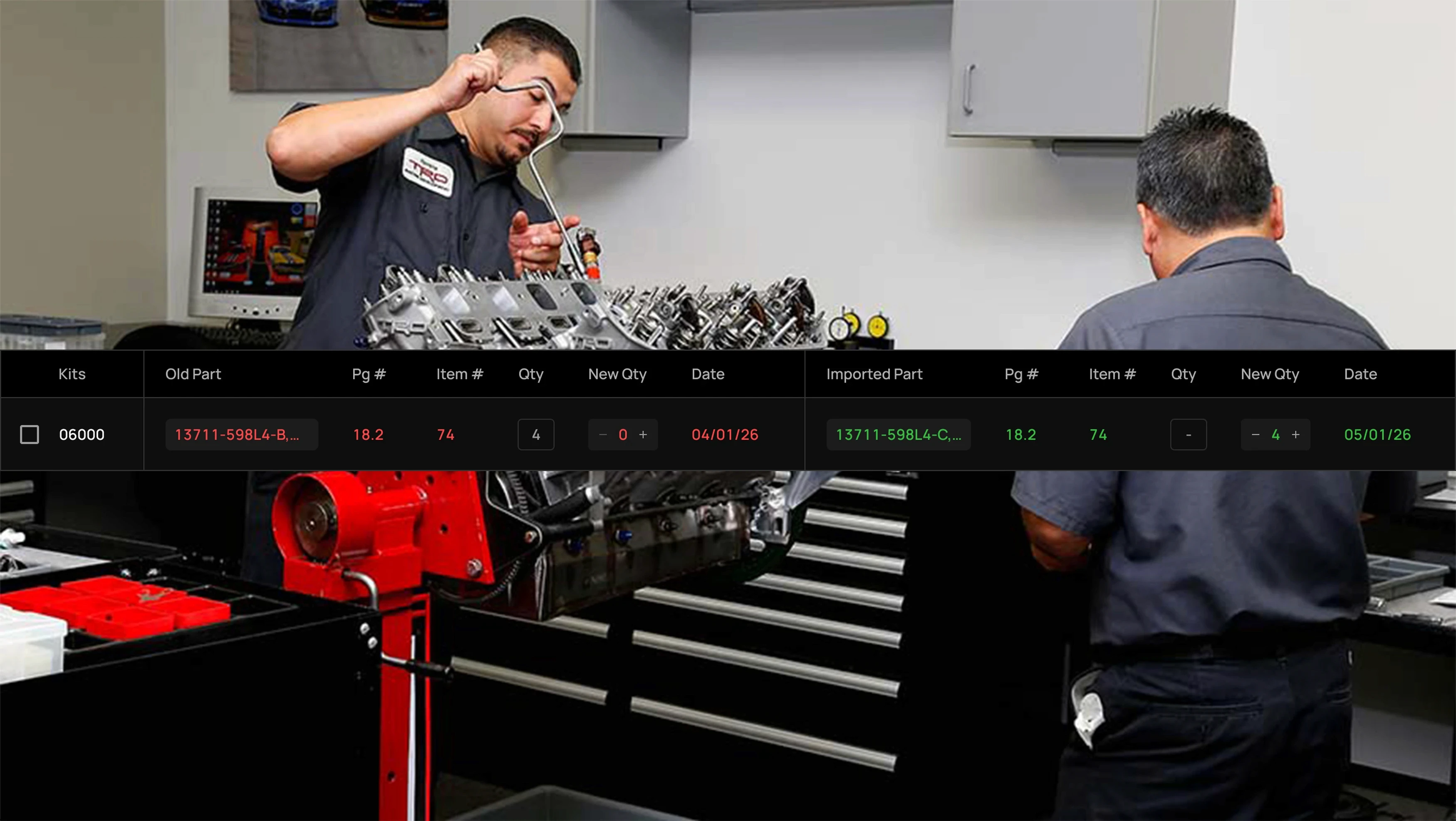
We worked with stakeholders and users to define future-state workflows for operational planning and decision-making across TRD. Mapping scenarios such as engine replacement helped clarify dependencies, constraints and the wider impact of each decision.

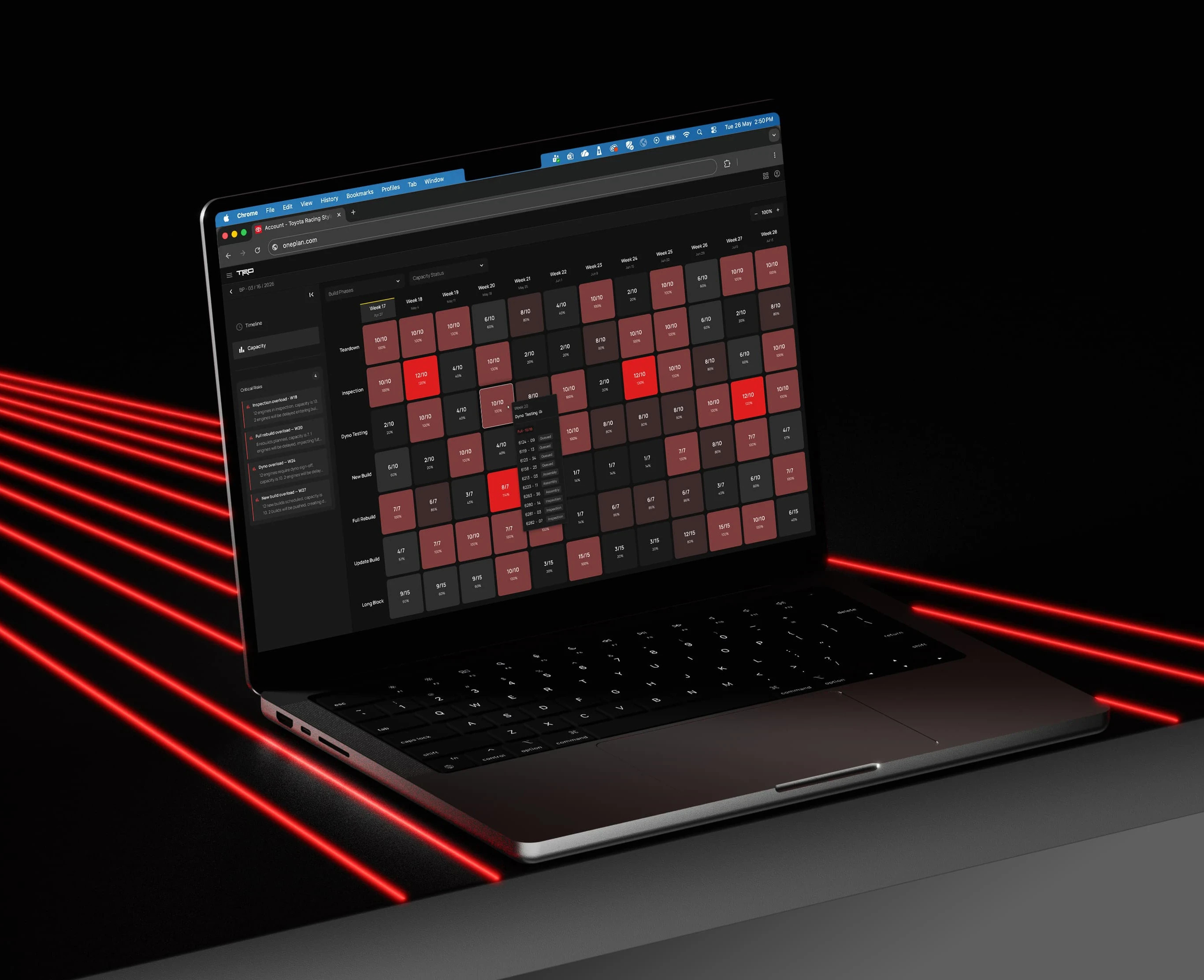
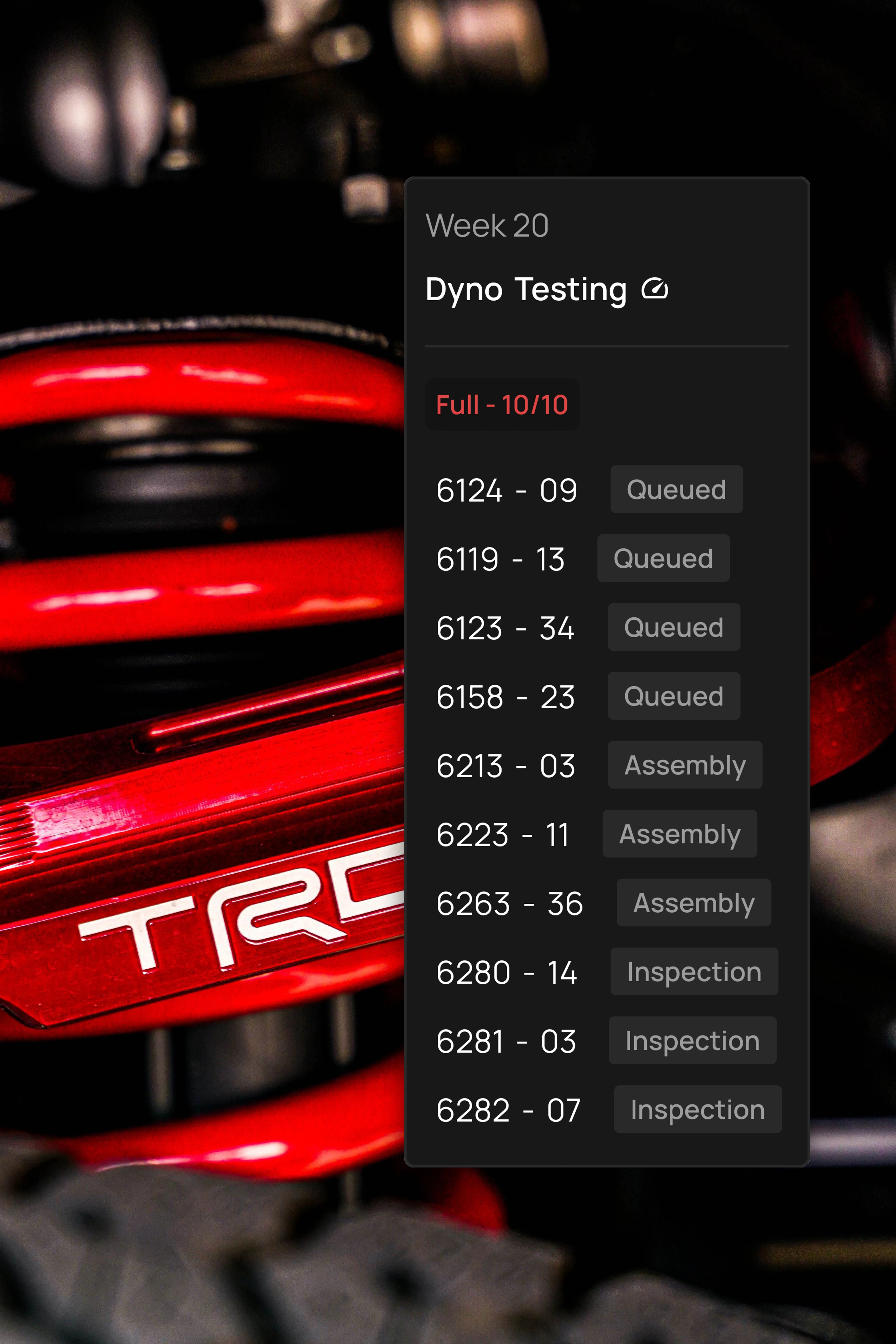
We then translated these flows into low-fidelity interface concepts, exploring how teams could compare scenarios, review capacity and coordinate build plans. Collaborative working sessions helped us test system logic and information hierarchy, building alignment before moving into detailed design.

Innovating Validation Through AI Prototyping
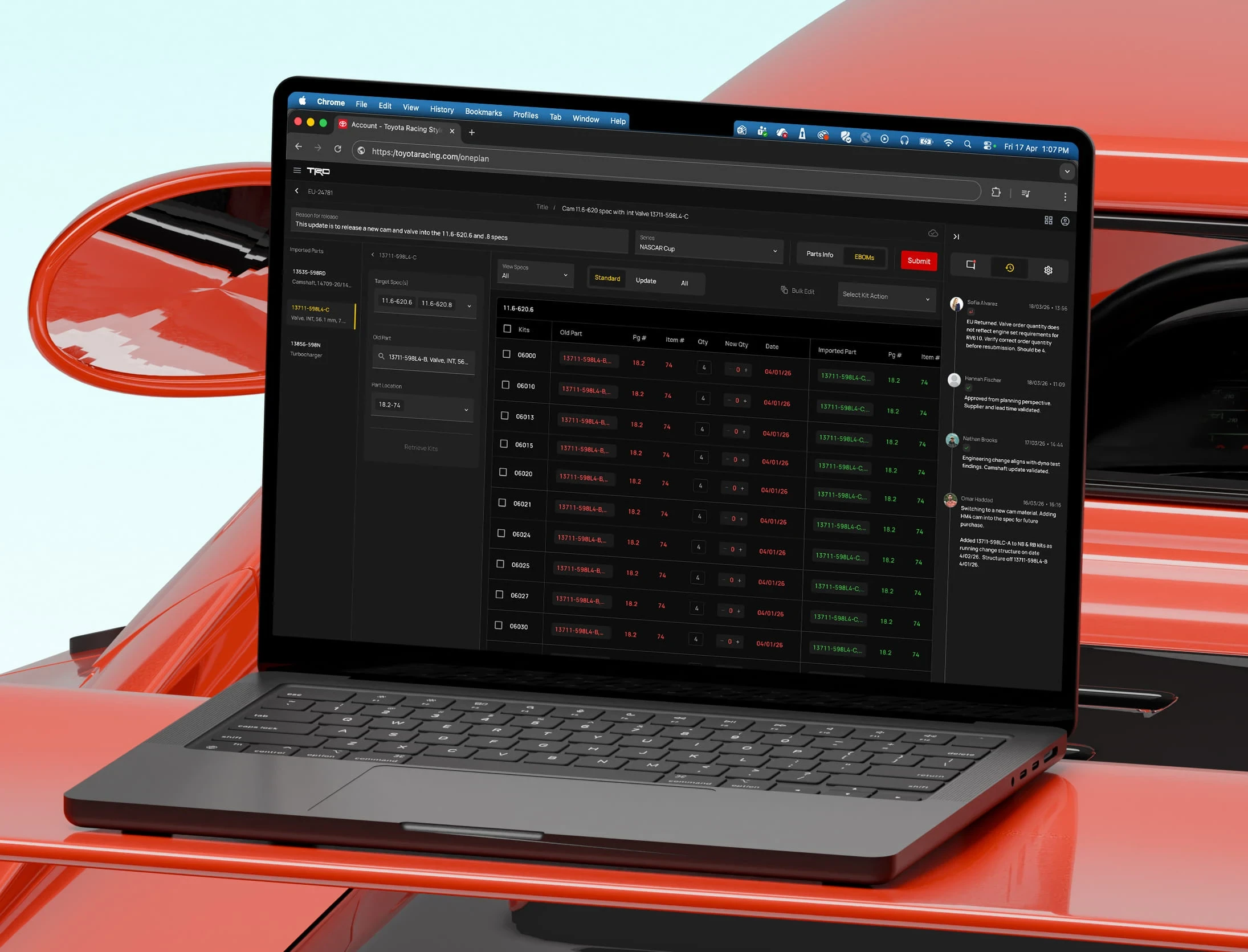
We leveraged AI-assisted development tools to rapidly build production-like prototypes with realistic data and system behaviour. This enabled stakeholders and users to test workflows in real-world scenarios, providing more accurate feedback and informing better design decisions.


Making Our Design System AI-Native
We used AI-assisted development tools to bring our Figma design system into code, with design taking ownership of the component library. This allowed us to build final designs using production-ready components, streamline engineering handoff, and establish a shared foundation that the client could reuse to generate consistent, design-system-aligned interfaces with AI.

By documenting reusable components, responsive behaviour, visual standards and accessibility requirements, we created a foundation the client’s team could build upon independently. This ensured future development and AI-generated interfaces could remain consistent with the design system long after our engagement.